
Online Casinos Canada-Wide: The Ultimate Guide to National & Provincial Regulations for 2026
The analytical team at Canada Casino Central has tracked the evolution of Canadian iGaming legislation for over a decade. In 2026, Canada’s gambling market remains one of the most complex, combining stringent provincial regulation with open access to offshore platforms across the rest of the country. Drawing on real-world testing data from hundreds of brands, we offer an objective portrait of the online casino landscape Canada-Wide.





Welcome Bonus
100%Up to C$1000

Welcome Bonus
N/ARakeback 50%

Welcome Bonus
125% + 50FSUp to 300FS

Welcome Bonus
100% + 30FSUp to C$450

Welcome Bonus
150% + 100FSUp to C$600

Welcome Bonus
100% + 150FSUp to C$450

Welcome Bonus
100% + 100FSUp to C$500

Welcome Bonus
100% + 100FSUp to C$600

Welcome Bonus
200% + 50FSUp to C$2500

Welcome Bonus
100%Up to C$650

Welcome Bonus
100% + 100FSUp to C$500
Why We Recommend These Casinos to Canadian Players
Every casino in our Canada-Wide database is evaluated against six non-negotiable criteria. A platform must pass all six before we recommend it to Canadian players.
Licence & Regulation
Active licences from Curaçao eGaming, Malta Gaming Authority, or Kahnawake. No licence = no listing.
CAD Currency Support
Full Canadian dollar support with no forced conversion fees — saving up to 6% per transaction cycle.
Local Payments
Interac e-Transfer, iDebit, or InstaDebit for deposits and withdrawals.
Bonus Transparency
Wagering requirements, max win caps, and game contribution rates disclosed in plain language — not buried in footnotes.
Mobile Experience
Full browser play on iOS and Android OS — no app download required. Tested on both platforms before publishing.
Payout Speed
Withdrawals within 24h for Interac and under 10 min for cryptocurrency. Platforms exceeding these limits are flagged.
Quick Facts

Canadian players often seek out online casinos Canada to find trustworthy platforms that support the national currency. Our goal is to explain how these sites operate and which laws protect your interests, no matter which province you call home, with a special focus on the accessibility of international (Canada-Wide) platforms.
Ontario
Canada’s first commercially regulated iGaming market, governed by iGaming Ontario (iGO). Only iGO-licensed platforms are available in the province.
- Legal age: 19+
- Regulator: iGaming Ontario (iGO)
- Market: Open commercial
Quebec
Loto-Québec maintains a strict provincial monopoly, while players freely access international grey-market platforms. French-language support is key.
- Legal age: 18+
- Regulator: Espacejeaux / RACJ
- Market: State monopoly + grey market
Alberta
AGLC oversees commercial gaming. Alberta is actively exploring an Ontario-style open market — one of the most dynamic provinces in 2026 year.
- Legal age: 18+
- Regulator: Alberta Gaming, AGLC
- Market: Transitional + grey market
In 2026, market structure is shaped by Canada’s federal Criminal Code, which historically prohibits gambling but carves out exceptions for provincial authorities. This has created a unique precedent: the federal government does not issue online casino licences, having devolved that power to the provinces.
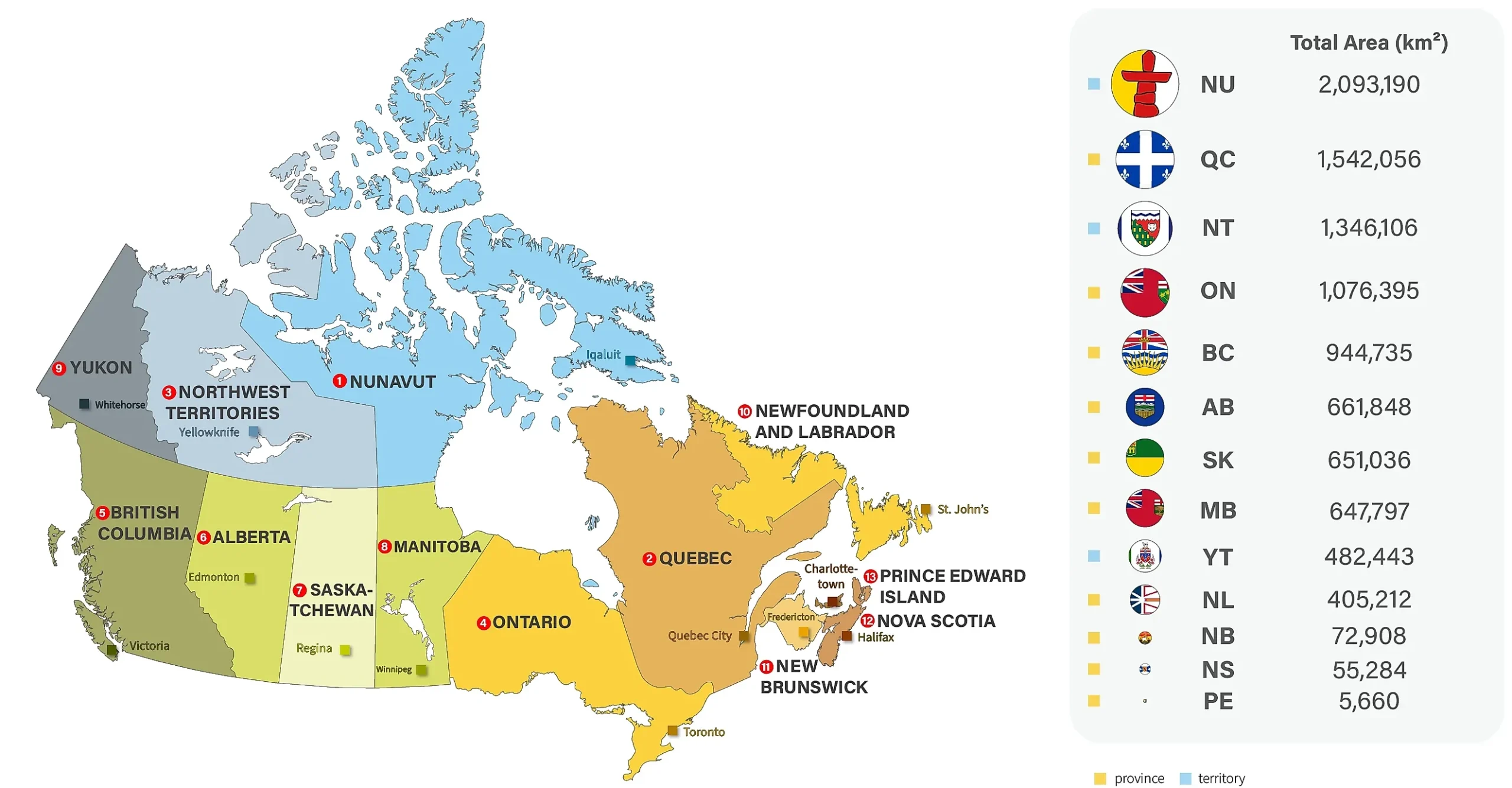
A pivotal shift occurred in 2021 with the passage of Bill C-218, legalizing single‑event sports betting. That decision accelerated market development and prompted provinces to refresh their rules. Today, the Canadian iGaming market is sharply divided between closed, regulated zones (such as Ontario) and the so‑called “grey market,” which is accessible Canada‑Wide.
Operating within the grey market are platforms licensed in other jurisdictions, for instance Curaçao (official regulator Curaçao eGaming). Players in British Columbia, Saskatchewan, or Nova Scotia may legally play on these international sites. Canadian law does not prohibit citizens from registering on offshore platforms, thereby ensuring the availability of online casinos Canada‑Wide.








To understand Canada gambling laws, one must see the difference between governance models. Ontario was the first to launch a fully regulated commercial market (iGO), blocking access to sites without a local licence. For most other provinces, Canada-Wide access to international platforms remains the primary option.
Quebec, for example, retains a strict monopoly under Loto‑Québec, though residents continue using international sites. Alberta, meanwhile, is actively debating an open model similar to Ontario’s, but as of 2026 it remains in a transitional state. The table below reflects the current situation.
| Characteristic | Ontario (iGO) | Quebec (Loto-Quebec) | Alberta (AGLC) | Rest of Canada |
|---|---|---|---|---|
| Market model | Open commercial | State monopoly | State monopoly (iGO under discussion) | Open access (Grey Market) |
| Offshore brand access | Prohibited | Grey Market accessible | Grey Market accessible | Fully open |
| Legal age | 19+ | 18+ | 18+ | Varies (typically 19+) |
The difficulty with federal law lies in its archaic nature. Many provisions of the Criminal Code were written decades ago and struggle to adapt to modern digital and cryptocurrency realities. This creates legal conflicts where casino servers are located in Europe or the Caribbean, but the player is physically sitting in Vancouver. This grey zone is precisely what allows Canadians to play Canada‑Wide on international platforms.
To fully understand the risks and opportunities that the current legal framework offers for Canada‑Wide play, a detailed analysis of precedents and interpretations by the Ministry of Justice is required. We have prepared an in‑depth article examining every legal nuance.

Legalities and Player Protection
The basic principle of player protection in Canada rests on a balance between federal prohibition and regional rights. Players must clearly understand which authority governs the platform they register on and what protection tools are available. If you use international online casinos (Canada‑Wide), your primary safeguards are the licences from jurisdictions such as Curaçao or the Isle of Man, along with the built‑in responsible gaming tools on the platforms themselves.
The Criminal Code and Section 207

Section 207 of the Criminal Code is the cornerstone of Canadian gambling. It allows provincial governments to “manage and conduct” lotteries and games of skill or chance. This wording gives entities such as BCLC (British Columbia) or ALC (Atlantic provinces) the legal right to operate within their territories.
However, the section does not explicitly prohibit ordinary citizens from using international sites. Offshore operators fall outside the jurisdiction of Canadian police, making their services accessible to Canadians in what is known as a “grey zone” — where there is no direct prohibition, yet no local regulation either. This is precisely what allows online casinos Canada‑Wide to exist.
Unlike European countries with a single standard, the legal gambling age in Canada is set by local authorities. Provincial gaming authorities strictly enforce these rules (KYC checks are mandatory on all legal and international sites).
Legal Gambling Age by Province

Sports Betting in Canada: The Impact of Bill C-218
The legalisation of single-event sports betting through Bill C-218 (2021) was the most significant reform to Canadian gambling law in decades. Prior to C-218, Canadians could only place parlay bets (two or more events combined) through provincial operators. Single-game wagers on a specific match outcome were prohibited under Section 207 of the Criminal Code.
The amendment opened the door for provinces to individually regulate and licence single-event sports wagering. Ontario moved fastest, integrating sports betting within the iGO framework by April 2022. Other provinces continue to evaluate their approach, while international sportsbooks accessible Canada-Wide have offered unrestricted single-event markets throughout.
| Platform Type | Single-Event Betting | Live In-Play | CAD Support | Availability |
|---|---|---|---|---|
| Ontario iGO Sportsbooks | Yes | Yes | Full CAD | Ontario only |
| Provincial Lottery (e.g. Proline+) | Yes (post C-218) | Limited | Full CAD | Province-specific |
| Canada-Wide Offshore | Yes (always available) | Full in-play | CAD + crypto | All provinces |
NHL & CFL
Ice hockey and the Canadian Football League generate the highest betting volumes. Most platforms offer full pre-match and live markets.
NBA & MLB
Basketball and baseball maintain strong year-round activity. Offshore platforms offer deeper prop-bet markets than provincial operators.
International Soccer
Premier League, Champions League, and World Cup events draw significant Canadian wagering. Live streaming available on select platforms.
Esports
CS2, League of Legends, and Dota 2 betting has grown substantially. Esports markets are almost exclusively on Canada-Wide offshore platforms.
Recreational Status (0% Tax)

For casual and recreational players, all winnings from online casinos, slots, or sports betting are 100% tax-free. The CRA categorises these payouts as unexpected windfall gains, meaning you do not need to report them on your annual tax return.
The Professional Exception

If gambling shifts from a hobby to your primary and systematic source of income, your net winnings are classified as business income. In this rare case, profits are taxable, but operational expenses (like software or entry fees) can be deducted.
CRA Evaluation Criteria

To draw the line between a hobbyist and a pro, the CRA tracks objective factors: frequency of play, the use of specialised skills/systems to minimize risk, historical profit patterns, and your clear commercial intention to generate a consistent profit.
Analyst Verdict for 2026

After more than a decade tracking Canadian iGaming legislation, our team’s view is clear: a CAD-supporting offshore platform with Interac or crypto rails remains the safest, most tax-efficient, and streamlined route for Canada-Wide players.
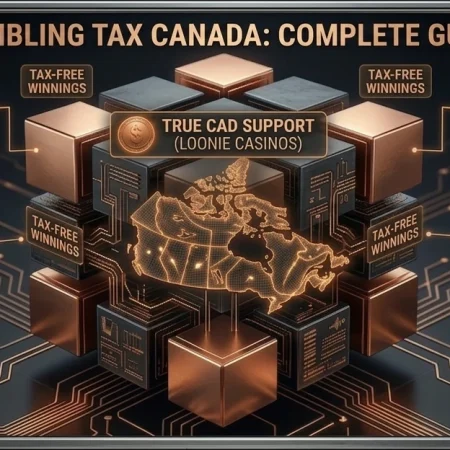
One of the major advantages of the Canadian market is its favourable tax policy. According to guidelines from the Canada Revenue Agency (CRA), any gambling income is considered a “windfall gain” and is not subject to tax for recreational players Canada‑Wide.
The only exception is professional players for whom gambling is a primary and systematic source of income. The line between a recreational user and a professional is drawn based on several strict CRA criteria, including frequency of play, use of specialised skills, and intention to generate a consistent profit.
After more than a decade tracking Canadian iGaming legislation, our team’s view is clear: a CAD-supporting offshore platform with Interac or crypto rails is the safest, most efficient route for Canada-Wide players in 2026.

Set Deposit Limits Manually
On offshore Canada‑Wide platforms, activate deposit limits in account settings — daily, weekly, or monthly caps on all reputable sites.

Request Self-Exclusion via Support
Contact casino support for a temporary or permanent block. Reputable platforms process these requests within 24 hours.

CPRG — Independent Help
The Canadian Partnership for Responsible Gambling (cprg.ca) provides tools and resources for players needing support — Canada‑Wide.
As of 2026, there is no single federal self‑exclusion registry for players in Canada. Each province maintains its own database, which applies only to local casinos and lotteries. This means that blocking an account on PlayOLG (Ontario) will not block your access to Espacejeux (Quebec) or to international sites available Canada‑Wide.
To ensure safety when playing on offshore Canada‑Wide platforms, users must manually activate deposit limits or request a block through the specific casino’s support service, relying on recommendations from independent organisations such as the Canadian Partnership for Responsible Gambling (CPRG).


The most familiar option for Canadians, ideal for rapid deposits and clear payment history.

An e-wallet that may offer more stability than crypto, free from exchange rate fluctuations.

Prepaid vouchers; an excellent choice if you prefer not to share your banking details for a deposit.

An online banking service useful for depositing directly from your bank without unnecessary intermediaries.

An online banking format often chosen as an alternative to bank cards.
Successful play is impossible without convenient and fast transactions. The gold standard in the country remains Interac casinos Canada. The Interac system allows for instant deposits and withdrawals directly from a bank account without sharing card details with the operator. This is especially convenient for players using Canada‑Wide platforms.
We strongly recommend choosing so‑called Loonie Casinos — sites that offer full support for the Canadian dollar (CAD). Playing in USD or EUR on non‑adapted platforms incurs hidden conversion fees that can reach 2.5–3% on each transaction.
Beyond traditional bank transfers, digital wallets iDebit and InstaDebit — created specifically for the Canadian market — are also popular. For those who prefer the grey market and value flexibility, crypto casinos are an ideal solution. Among trusted international platforms well adapted to Canadian payments in 2026, we highlight Vavada, Spinbetter, as well as Vodka Bet and Duel. All support Interac and accept cryptocurrency, ensuring Canada‑Wide access.
How to start playing with Interac
Choose a Canada-Wide brand from our list (Drip, Cat or Play Fortuna are good starting points). Verify the casino displays a clickable Curacao or Malta licence number in the footer before depositing.

Go to the Cashier section and select Interac as the deposit method. The system will redirect you to a secure Interac payment gateway tied to your bank.

Enter the deposit amount in Canadian dollars. There is no need to convert to USD or EUR, which avoids hidden conversion fees of 2 to 3 percent per transaction.

Sign in to your online banking and confirm the transaction. Funds arrive in your casino account instantly, and you are ready to play. Withdrawals via Interac follow the same path in reverse and typically clear within minutes.

Alternative platforms such as Jet, Fairspin, Gama and Booi also deliver a seamless withdrawal experience to local bank accounts for Canada-Wide players. These venues round out the recommended list with diverse bonus programs and fast crypto cashiers.
Based on our analytics, the Canadian gambling market in 2026 is valued at over 14 billion Canadian dollars annually. This colossal volume is generated primarily by mobile gambling. Approximately 78% of all sessions take place on smartphones, pushing operators of Canada‑Wide platforms to optimise their interfaces for mobile screens.
Yes. For the average player there are no laws prohibiting registration and play at international (offshore) sites accessible Canada-Wide, nor at locally regulated platforms in certain provinces. The Canadian Criminal Code does not prosecute users for online play.
No, if you are a recreational player. The Canada Revenue Agency (CRA) does not tax incidental winnings from lotteries or casinos, and this rule applies to players Canada-Wide. Only professional players, for whom gambling is a business, are taxed.
The age depends on the province. In Alberta, Quebec and Manitoba you can play from age 18. In all other provinces and territories, including Ontario and British Columbia, the legal age is 19.
Not at every venue. Many European sites use only EUR or USD, which leads to conversion fees. We strongly recommend choosing platforms from our Loonie Casinos list.
Ontario casinos are licensed by iGaming Ontario, pay local taxes, and are available only to players physically present in the province. Canada-Wide international sites are licensed abroad, offer wider limits and bonuses.
Author

No Deposit. No Risk. Real Rewards.
Our experts analysed dozens of Canadian promotions to find the no-deposit offers that actually deliver. Pick yours and play on the house.
See the Best Offers