Throughout my time at canadacasinocentral.com, hundreds of stories have passed before my eyes. Some individuals open an account out of curiosity, make a few deposits, and over time break even. Others receive winnings comparable to an annual income, and only then begin to ponder how the site they’ve been playing on actually operates.
The Canadian gambling market exists at the intersection of federal norms and provincial decisions. A player sees only the interface, a list of slots, and a balance in CAD, but behind this lie licences, payment infrastructure, regulators, and user verification procedures. Understanding the inner workings significantly reduces the number of unpleasant surprises on the journey from registration to fund withdrawal.
Legal Frameworks: Provinces, Age, and Types of Platforms
The starting point is the Criminal Code of Canada. It prohibits organising gambling without state permission but delegates the authority to regulate the industry to the provinces and territories. Consequently, each jurisdiction builds its own model: in some places, only a government-run site operates; in Ontario, a system for licensing private operators is in effect; and international .com casinos remain in a grey zone, relying on foreign regulators.
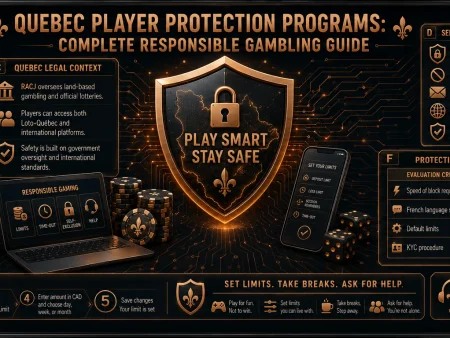
The age threshold also depends on the region. In most provinces, playing online for money is permitted from age 19, while in Alberta, Manitoba, and Quebec, the threshold is 18 years old. A licensed online casino is obligated to consider these requirements, hence it requests date of birth and documents confirming identity and address during registration and before the first large withdrawal.
Registration and Identity Verification: Why It’s Unavoidable
Registration typically takes several minutes: name, date of birth, address, contact details are provided, the account currency is chosen, and a password is created. At this moment, the player accepts the terms of use, the rules of bonus programs, the privacy policy, and the procedure for processing payments. Formally, this is the starting point for the contractual relationship between the user and the operator.
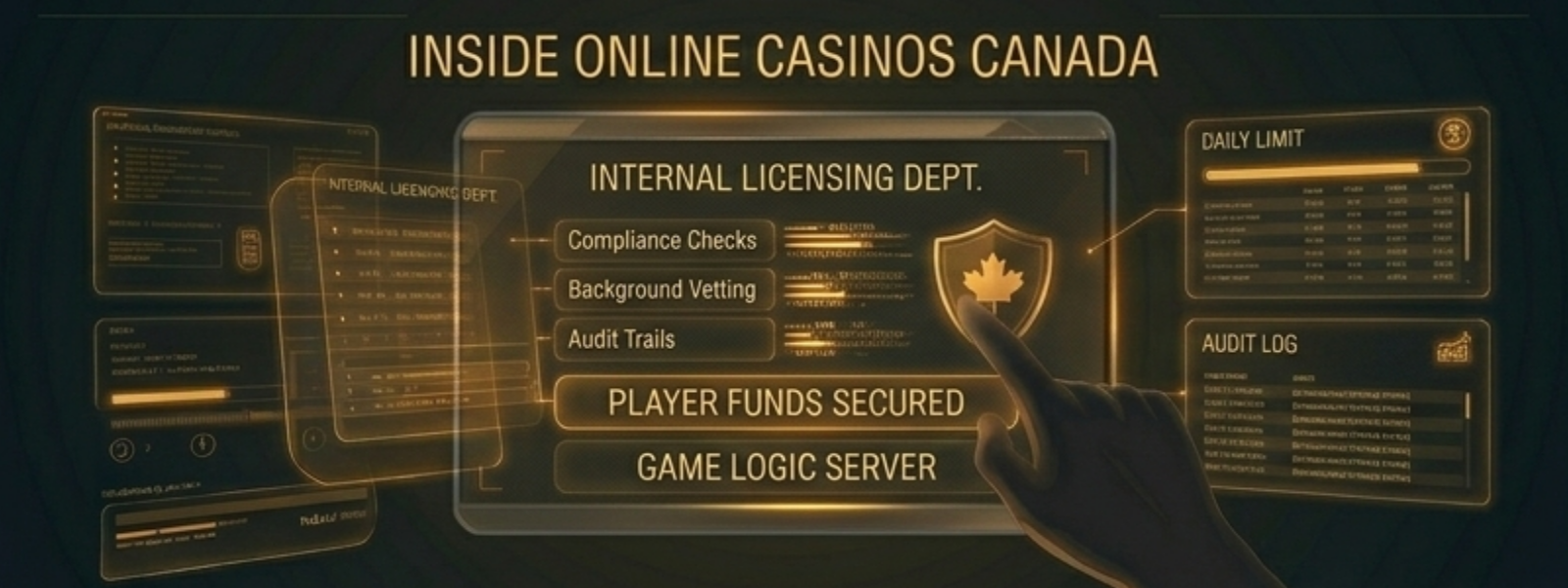
Next comes the KYC/AML stage—procedures for client identification and anti-money laundering. A casino operating under a licence is obligated to verify that the person opening the account and withdrawing funds actually exists, has reached the legally established age, and is not using the platform for dubious transactions. Therefore, copies of documents, proof of address, and sometimes an additional photo or video call are requested.
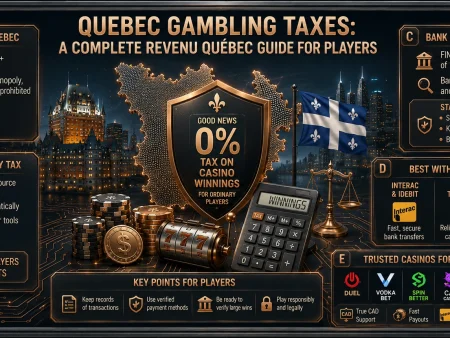
Payments in Canadian Dollars and the Role of Interac
For the Canadian user, it is fundamentally important in which currency the account is held and which payment solutions are available. Reliable operators offer opening an account in CAD and support a set of locally significant methods: Interac e-Transfer, MuchBetter, bank cards, e-wallets, and cryptocurrencies.
Interac occupies a central place in this system. It is a national payment network connected to most banks and credit unions. Integrating Interac into an online casino allows for funding and withdrawals in a familiar format, with clear timelines and limits, while simultaneously complying with the requirements of Canadian financial institutions for transaction monitoring.
Games, Providers, and Fairness of Outcomes
The gaming section of a Canadian online casino is formed from products of independent studios. Slots, virtual table games, and live dealer tables are integrated through the operator’s platform but remain the software of third-party providers, certified by regulators and auditors.
Fairness of outcomes is ensured by a Random Number Generator and a predetermined Return to Player percentage over the long term. Verification of compliance with these parameters is entrusted to supervisory bodies and specialised audit companies, which test the games and confirm their adherence to standards. An operator working under a licence is not permitted to alter round outcomes in favour of the platform or a specific user.
Bonuses, Limits, and Responsible Gaming
Bonus offers are an important but often misunderstood element of an online casino’s operations. Welcome packages, free spins, loyalty programs, and cashback increase engagement but come with conditions: wagering requirements, maximum bet restrictions, lists of eligible games, and sometimes a limit on the maximum sum that can be withdrawn from an active bonus.
Most disputes arise precisely at the intersection of bonus activity and inattentive reading of the rules. A player may increase a bet above the permissible limit, attempt to withdraw funds before fulfilling wagering requirements, or use games not counted towards progress, subsequently facing a balance adjustment. Meanwhile, the order of bonus operation is usually detailed in the promotion’s terms and the site’s general rules.
FAQ
Often, at the initial stage, a casino limits itself to basic data verification, but as deposits and withdrawal attempts grow, the operator is obligated to request documents. This is related to the requirements of regulators and financial partners, not to the size of a specific win in and of itself.
Funding is usually processed automatically through a payment gateway, whereas withdrawals undergo additional control: identity verification, compliance of operations with rules, limits on sums, and requirements of partner banks. This is standard practice for licensed platforms in Canada.
A government platform is directly subordinate to the provincial regulator and is fully integrated into local legislation. International sites operate under foreign licences, and their relationships with Canadian players rely on a combination of these licences, general norms, and the specific operator’s policy.
When using certified games and a recognised licence, the operator does not have the technical right to interfere with the operation of the Random Number Generator. Any such intervention would contradict licence terms and create a high risk of sanctions from the regulator.
Deposit limits, self-exclusion, and other mechanisms are precisely for the long-term perspective. They help maintain a predictable level of expenditure and avoid situations where emotional decisions in the moment lead to serious financial consequences.