

Cryptocurrency at Canadian online casinos offers a way to fund accounts and withdraw winnings beyond the constraints of banking hours, often with fewer declines than card-based transactions. This page provides a meticulous breakdown of the most common coins and networks (BTC, ETH, USDT, USDC), how to avoid network errors (ERC-20, TRC-20, and others), and what to anticipate regarding fees and processing speeds. It also explains why a casino might request verification upon withdrawal and how to navigate this process without surprises. This material is for informational purposes only and does not constitute financial advice.
Our evaluations of crypto casinos are based on their supported coins and networks, the transparency of their fee structures and limits, the clarity of their withdrawal policies, and the consistency of their request processing. Each brand listed below links to a comprehensive review detailing its specific terms and restrictions.

Welcome Bonus
100%Up to C$1000

Welcome Bonus
N/ARakeback 50%

Welcome Bonus
125% + 50FSUp to 300FS

Welcome Bonus
100% + 30FSUp to C$450

Welcome Bonus
150% + 100FSUp to C$600

Welcome Bonus
100% + 150FSUp to C$450

Welcome Bonus
100% + 100FSUp to C$500

Welcome Bonus
100% + 100FSUp to C$600

Welcome Bonus
200% + 50FSUp to C$2500

Welcome Bonus
100%Up to C$650

Welcome Bonus
100% + 100FSUp to C$500
Frankly, the prevalence of cryptocurrency at Canadian online casinos is less a matter of trend and more one of genuine utility. A player typically requires three things: rapid account funding, stress-free withdrawal of winnings, and the avoidance of banking impediments.
Cryptocurrency most often prevails through pragmatism: payments operate 24/7, card details need not be disclosed to the casino, and stablecoins mitigate anxiety over exchange rate fluctuations. Two core motivations follow: speed and privacy.

Faster Payouts and Fewer Bank Declines
Crypto is valued for its predictability at the cashier: deposits are transferred directly and confirmed by the network, making “bank refusal” and superfluous verifications less frequent, though this is contingent upon one’s financial institution and chosen method. Payments function continuously, and speed is typically dictated by network congestion and the selected transfer protocol, not bank operating hours. A crucial distinction remains, however: while the blockchain expedites the transfer itself, the casino’s internal protocols ultimately govern the approval of withdrawal requests. The conclusion is straightforward: if expedited payouts are the priority, select platforms with lucid withdrawal policies and support for convenient networks.
Privacy, Not Anonymity – What That Means in Practice
Cryptocurrency affords privacy at the point of payment: it obviates the need to enter card details or disclose superfluous financial information, a prospect many Canadian players find inherently reassuring. This approach is particularly appealing when one prefers to keep gaming activity distinct from primary banking and daily expenditures. Yet privacy is not synonymous with anonymity: blockchain transactions are publicly visible, and a casino may request KYC verification for withdrawals or high-value transactions. The takeaway is simple: utilise crypto as a convenient payment method, maintain a separate wallet for gaming, and always verify the network prior to transfer.

At CA casinos, cryptocurrency is typically employed as a payment instrument – essentially, a mechanism to deposit funds and receive payouts via the blockchain rather than through a bank. “Legality” in practice, however, is comprised of two elements: the specific policies of the casino in question and the compliance requirements that may prompt verifications and restrictions. Furthermore, terms can vary considerably between brands and may shift depending on provincial regulations. It is therefore essential to comprehend the foundational rules before making an initial deposit. With these nuances in mind, cryptocurrency becomes a convenient and predictable option, devoid of unwelcome surprises at withdrawal.
KYC and Withdrawals – Why Verification Can Still Occur

While cryptocurrency often streamlines the deposit process, a casino may still request identity verification upon withdrawal – particularly for substantial sums, atypical account activity, or newly registered accounts. This is generally attributable not to the crypto itself, but to the internal security and compliance protocols that casinos apply to all payouts. Consequently, a swift blockchain transfer does not guarantee instantaneous application approval; the casino must first confirm the legitimacy of the withdrawal. If minimal documentation requirements are a priority, consult our section on Low-KYC Casinos, which curates platforms known for more lenient verification policies. This does not, however, eliminate KYC entirely; verifications remain possible at any casino for withdrawals or high-value transactions.
Provincial Differences – Why Rules May Vary Across Canada

Canada does not always operate under a single, uniform framework; regulations can differ by province and are further shaped by how individual brands configure their restrictions. As a result, cryptocurrency may be more widely accessible in one region, while another imposes nuances regarding payment methods, transaction limits, or verification protocols. This is a normal function of local conditions and brand-specific regional settings. Rather than speculate, it is most effective to navigate from the appropriate reference point: consult our Canada-wide page for a general overview, and for regional specifics, refer to the dedicated pages for Ontario, Quebec, or Alberta. The principle is clear: before depositing, consult the provincial page and the selected casino’s terms to preclude surprises.
Canadian online casinos most commonly feature BTC, ETH, and stablecoins such as USDT or USDC. The distinction between them extends beyond the coin’s nomenclature; in practice, transaction fees, processing speed, and the desirability of value stability for deposits and withdrawals are paramount.
The concise reference below outlines typical player preferences and the nuances to examine at the casino cashier.
| Coin | Best for | What to Watch |
|---|---|---|
| BTC | Maximum acceptance and compatibility | Fees and speed vary with network congestion |
| ETH | When ETH or the Ethereum ecosystem is specifically desired | Fees can be higher; network selection is critical |
| USDT | Stable value for deposits and withdrawals | Selecting the correct network is essential |
| USDC | Stability and predictability | Network support depends on the casino |
Bitcoin
is generally chosen for its unparalleled acceptance; it is ubiquitous and suitable for larger transfers, though confirmation times and fees can fluctuate considerably with network demand.
Ethereum
is useful if you already hold ETH or if the casino is oriented toward the Ethereum ecosystem – however, it is not always the most economical choice for smaller deposits due to its fee structure and network characteristics.
USDT
is often the most pragmatic option for gaming; its value does not fluctuate with exchange rates, facilitating simpler deposit and withdrawal planning. Crucially, the correct network must be selected to avoid excessive fees or transfer errors.
USDC
operates on a similar principle to USDT and is equally convenient for maintaining a stable value. The primary distinction typically lies in availability: not every casino supports USDC across all networks, so cashier verification prior to deposit is prudent.
Communication
We will now examine the most critical aspect – why the network often supersedes the coin in importance, and which errors most frequently result in lost time and protracted correspondence with support.
At a casino cashier, it is easy to assume the coin is paramount; in practice, however, the network is decisive. USDT across different networks functions less like a single currency and more like disparate payment methods – fees, speed, and even the risk of error can vary substantially. Therefore, before initiating a transfer, it is essential to note not merely “USDT” or “ETH,” but precisely which network variant the chosen casino’s cashier offers.
Common mistakes that waste time
- Wrong network – The most frequent occurrence: a transfer is sent to a network different from the one specified by the casino. At best, funds are delayed and require manual reconciliation; at worst, resolution is protracted, and retrieval may be complex or impossible.
- Missing memo/tag – Some addresses require an additional identifier. Its omission can prevent automatic crediting of the payment. While not universally required, when applicable, it typically results in support correspondence and a request for the TXID.
- Below minimum deposit – Certain casinos do not credit sums falling below the minimum threshold, or do so only after contacting support. This creates the impression of a lost transfer when, in fact, it merely contravenes the cashier’s terms.
We now proceed to the most pragmatic segment: a step-by-step guide to making a crypto deposit, ensuring funds are credited swiftly and without unnecessary complication.
A cryptocurrency deposit typically requires less time and fewer “banking” confirmations, yet it adheres to an inviolable rule: the cashier penalises inattention to network and address details. When executed with care, funds are credited expeditiously and without incident.
Navigate to the cashier of your selected online casino and open the Crypto section. Choose the coin you wish to deposit, such as BTC, ETH, USDT, or USDC.

If the cashier presents a network selection, specify the required network immediately. This network must be identical to the one you will subsequently select in your wallet – this is the single most critical element of the entire process.

Copy the deposit address from the cashier. If the casino displays a memo or tag, record it as well; without it, the payment may not be credited automatically.

Open your wallet, paste the address, select the same network, and enter the amount. For a first deposit or a substantial transaction, a modest test transfer is advisable to confirm that all settings are correctly configured.

After sending, save the TXID – the blockchain transaction identifier. This is the most efficient reference for checking status and communicating with support if necessary. Await the requisite number of confirmations; requirements vary by coin and casino.

Once confirmations are complete, the deposit will appear in your balance. If the cashier displays a status update, a screenshot can expedite resolution should a delay occur.

Withdrawals via cryptocurrency often feel faster than bank transfers, yet they operate under a distinct logic: the casino first reviews the request, and only then does the blockchain execute the transfer. Understanding this sequence and the status of your request demystifies the process.
Withdrawal timeline
- Request submitted – You initiate a withdrawal request at the cashier, specifying the coin, network, and wallet address. Precision is paramount: the address must be exact, and the network must match that supported by the casino.
- Security checks – The casino may request login confirmation, 2FA activation, answers to security questions, or KYC verification, particularly for first withdrawals or substantial sums.
- Approval – The request is approved, and the casino prepares the transfer. A “processing” status during this phase is normal.
- Blockchain transfer – The transaction is broadcast to the network, a TXID is generated, and completion depends on confirmations and network congestion.
- Completed – Funds arrive in your wallet following the required number of confirmations.

Why a withdrawal may be delayed
The cause is most often found not in the cryptocurrency itself, but in the casino’s internal policies: supplementary verifications, transaction limits, discrepancies in account data, or the need to complete KYC. A second frequent factor is the network: high congestion, pending confirmations, or the selection of a network with inherently higher fees. The rarest, yet most inconvenient, scenario involves an error in network or address selection – hence the importance of double-checking all details before submitting the request.
How to resolve issues promptly
If a TXID has been generated for your request, verify the transaction using it; this will indicate whether the funds have been released to the network. If no TXID exists and the status remains static for an extended period, a concise message to support, specifying the request time, coin, and network, typically enables them to locate the payment within the system more rapidly.

In crypto payments, two realities almost always coexist: the network’s promise and the casino’s operational protocols. The blockchain governs network fees and confirmations; the casino controls request processing, limits, and potential verifications. Distinguishing between these clarifies what you are paying for and why delays occasionally occur.
| Fee / Factor | Who charges it | When it appears | What it affects | Quick note |
|---|---|---|---|---|
| Network fee | Blockchain network | When sending a deposit or withdrawal | Final cost of transfer; confirmation speed | Depends on network load and chosen chain |
| Casino fee | Casino (sometimes) | Usually on withdrawals; less often on deposits | Net amount received | Check cashier / withdrawal policy |
| Exchange fee | Exchange or swap service | When buying, swapping, or cashing out crypto | Total cost of entering/exiting crypto | Fees vary by platform and method |
| Conversion spread | Exchange / swap rate | During conversion | How favourable the rate is | A “hidden” cost – compare rates |
If predictability of value is paramount, stablecoins are frequently the more suitable choice. If universal acceptance is the priority and you are at ease with exchange rate fluctuations, Bitcoin remains the versatile standard. The essential distinction is not one of absolute superiority, but of how each aligns with your deposit and withdrawal strategy.

Stablecoins (USDT/USDC) are typically preferred for gaming because the amount does not “float” with the market. This is particularly advantageous during withdrawals: while the request undergoes processing and confirmations, one need not be concerned that the final value of the payout will have shifted by several percentage points. An additional benefit is the facilitation of precise bankroll management and a clear understanding of exact amounts deposited and withdrawn.

Bitcoin is often selected when a universally accepted option is desired, or when sums are substantial and volatility is not perceived as a liability. It is near-ubiquitous, yet it carries a distinct characteristic: the exchange rate can shift noticeably even within a short timeframe, and both fees and speed are contingent upon network congestion.
Cryptocurrency excels when a rapid transfer is required, independent of banking hours and offering flexible network selection. However, Canadian players often have access to more “traditional” options. For a comprehensive analysis of each method and curated lists of casinos supporting them, please consult our dedicated pages: Interac e-Transfer, iDebit, InstaDebit, and PaySafeCard.
| Method | Deposits | Withdrawals | Fees – What to Expect | Privacy | KYC at Withdrawal | Best For |
|---|---|---|---|---|---|---|
| Crypto (BTC, ETH, USDT, USDC) | Usually fast, 24/7 | Depends on casino approval + network confirmations | Network fee always; casino fee sometimes | Higher privacy at the payment step | Common, especially for first or large withdrawals | Speed, fewer bank declines, stablecoins for predictable value |
| Interac e-Transfer | Fast, familiar | Often reliable, can be fast | Usually low; depends on casino and bank | Medium | Possible, especially for larger payouts | Simple CAD deposits and a straightforward banking flow |
| iDebit | Quick online-banking style | Varies by casino, usually predictable | Service fees may apply depending on casino | Medium | Possible | Bank-linked payments without using cards |
| InstaDebit | Quick online-banking style | Varies by casino, usually predictable | Service fees may apply depending on casino | Medium | Possible | Similar to iDebit; convenient for online banking deposits |
| PaySafeCard | Very fast | Typically not supported for withdrawals; payout via another method | Card fees may apply; casino rules vary | Higher at the deposit step | Often, because payouts require identity checks | Quick deposits without sharing bank card details |
*Method availability may vary by province and brand – detailed information is aggregated on the respective pages.
The following resources address cryptocurrency at Canadian online casinos: networks and fees, deposits and withdrawals, verification, security, and common errors. These articles supplement the current page and facilitate rapid comprehension of specific scenarios – select a topic for an in-depth analysis.
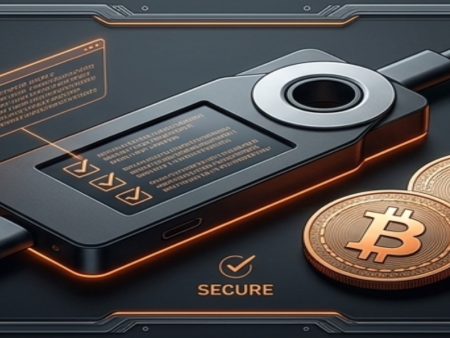


Cryptocurrency can be one of the most convenient methods for depositing and withdrawing at Canadian online casinos, provided it is approached as a payment instrument rather than an abstraction. Select your network deliberately, verify the address before transmission, and retain the TXID – this minimal discipline materially conserves time when the network is congested or the casino seeks payment clarification. For stable deposit and withdrawal amounts, stablecoins such as USDT or USDC are generally the most practical.
Should you require an analysis of a particular circumstance – a delayed deposit, network selection, minimal verification prerequisites, or expedited payouts – please consult one of the articles within the Crypto Casino Guides and Articles section above.
Author

Casinos That Pay in Loonies
No conversion headaches — deposit, play and cash out in Canadian dollars. Browse the top CAD-friendly casinos we’ve vetted for you.
See Loonie Casinos