
Best Online Casinos in Quebec 2026: A Local Expert’s Guide to Safe Play
Canada Casino Central presents a detailed analysis of Quebec’s gambling market. Our expert team has continuously tracked the development of the digital entertainment sector and the initiatives of the local regulator, RACJ, since 2010. By the end of 2026, the francophone province remains one of the most unique jurisdictions in all of North America.





Welcome Bonus
100%Up to C$1000

Welcome Bonus
N/ARakeback 50%

Welcome Bonus
125% + 50FSUp to 300FS

Welcome Bonus
100% + 30FSUp to C$450

Welcome Bonus
150% + 100FSUp to C$600

Welcome Bonus
100% + 150FSUp to C$450

Welcome Bonus
100% + 100FSUp to C$500

Welcome Bonus
100% + 100FSUp to C$600

Welcome Bonus
200% + 50FSUp to C$2500

Welcome Bonus
100%Up to C$650

Welcome Bonus
100% + 100FSUp to C$500
Ontario
The province operates a unique, fully regulated commercial iGaming structure managed by iGaming Ontario (iGO). Local residents can exclusively access platforms holding an official provincial licence.
- Legal age: 19+
- Regulator: iGaming Ontario (iGO)
- Market: Open commercial
Canada-Wide
This zone encompasses all other territories where players can legally enjoy premium offshore casino sites licensed by Kahnawake or Malta, featuring full support for crypto and Interac.
- Legal age: 19+ (18+ in AB/MB)
- Regulator: Kahnawake / Offshore (MGA, Curaçao)
- Market: Open grey market
Alberta
While the AGLC currently regulates the local market, Alberta is aggressively shifting toward an open, Ontario-style competitive model, making it the most progressive region this year.
- Legal age: 18+
- Regulator: Alberta Gaming, AGLC
- Market: Transitional + grey market
Unlike most other provinces, the legal gambling age in Quebec is 18, not 19. This is a key factor that attracts a younger audience to various gaming platforms with no deposit bonuses. The official and only locally licensed operator is the state corporation Loto‑Québec. However, Quebec’s laws do not prohibit residents from using international sites.

Under Quebec gambling laws, users face no fines or prosecution for registering on offshore resources. The alcohol, racing, and gaming authority known as RACJ strictly controls land‑based establishments and state lotteries. At the same time, the international online casino sector remains open, creating high competition in the market.
The Espacejeux versus offshore dynamic shows that many players prefer international platforms because of a wider selection of games and bonuses. Brands licensed abroad, such as Vavada or Cat, actively adapt their services to Canadians’ needs, offering true Canadian dollar (CAD) support and French‑language interfaces.

Although the Espacejeux platform is the only locally regulated site, residents of Quebec face no legal liability for playing at international casinos (for example, those on our list). However, ensure that the site you choose supports CAD and offers service in French, since consumer protection in Quebec relies heavily on language accessibility.
To understand the specifics of the local market, it is necessary to compare Quebec with other regions of the country. In 2026, Canada’s gambling landscape is highly fragmented. While Ontario has transitioned to a strict private licensing system through iGO, Quebec has retained a hybrid model. Alberta is currently launching its new framework, but Quebec is in no hurry to change its laws.
An important milestone in regulatory history was the Quebec government’s 2016 attempt to pass Bill 74. That law would have mandated internet service providers to block IP addresses of unlicensed offshore operators. However, the Supreme Court of Canada ruled that Bill 74 violated federal telecommunications laws. That decision permanently cemented the market’s open status.
| Criterion | Quebec (QC) | Ontario (ON) |
|---|---|---|
| Legal age | 18 years | 19 years |
| Access to offshore sites | Fully open | Restricted (only iGO‑licensed sites) |
| State operator | Espacejeux | OLG |
The failure of Bill 74 has allowed international projects such as Booi and Fairspin to operate freely in the province. When searching for the best online casinos for Quebecers, players often look for convenient local payment methods. Using the Interac system remains the most popular and reliable transaction method in 2026.


The online casino market is constantly transforming. To navigate Quebec’s digital entertainment industry safely, it is essential to understand three fundamental aspects. Below we briefly examine each one. These teasers lead to our detailed analytical reports, updated for the end of 2026.

Quebec Regulatory Bodies and the Future of Licensing
RACJ regulations cover a wide range of matters, from licensing bingo halls to controlling horse racing. In the online context, the regulator strictly oversees the state platform but has no authority to block offshore online casinos. Many experts wonder whether Quebec will follow Ontario’s example and introduce a closed private licensing system in the future. Read the full analysis of regulation and laws.
Taxation on Gambling Winnings in Quebec
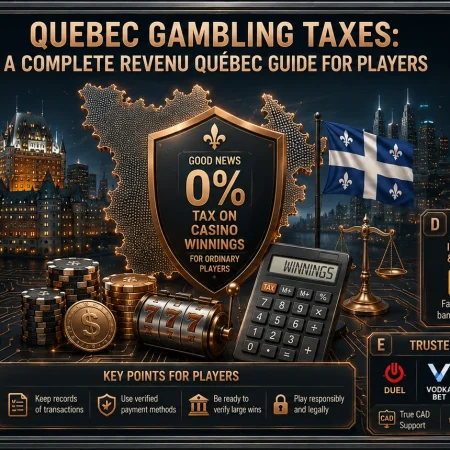
The topic of gambling tax in Quebec raises many questions for newcomers. Under the rules of the Canada Revenue Agency (CRA) and Revenu Québec, recreational winnings from online casinos are not taxed. However, if gambling becomes your primary source of income and takes on the characteristics of a professional activity, the tax authorities may require you to declare those profits. Learn more about taxes on winnings.


The biggest reason is the 300 million dollars in tax money that Quebec misses out on every year. People who want a change say that taxing private sites would bring in that money and provide better protection for players compared to the current unregulated market where there is no local oversight.
Loto-Québec argues that all the money they make stays in the province to pay for public services. They believe that if private international companies enter the market, a lot of that money will leave Quebec and go to shareholders in other countries.
It is a bit of a legal gray area. Loto-Québec is the only one with a license to run games from inside the province, but there is no law that says a regular person cannot use a site based in another country. This confusion is one of the reasons people want new and clearer laws to resolve the situation.
After opening its market, Ontario proved that its government run group, the OLG, can still be successful even when there are many private competitors. This shows that opening the market can grow the whole industry and bring in more money for the government without killing the public corporation.
The grey market is made up of thousands of gaming sites based in other countries that take players from Quebec without a local license. It is a problem as the government cannot collect taxes from them and there is no way to make sure they are treating players fairly or following safety rules.
Author

Everything Canadian Players Need to Know
Laws, taxes, payments and bonuses — all the verified intel in one place. Dive into our Resource Hub and stop guessing where to play.
Explore the Resource Hub